 champignonmagique-quebec.com
Best Foraging Apps and Field Guides for Quebec Mushroom Hunters
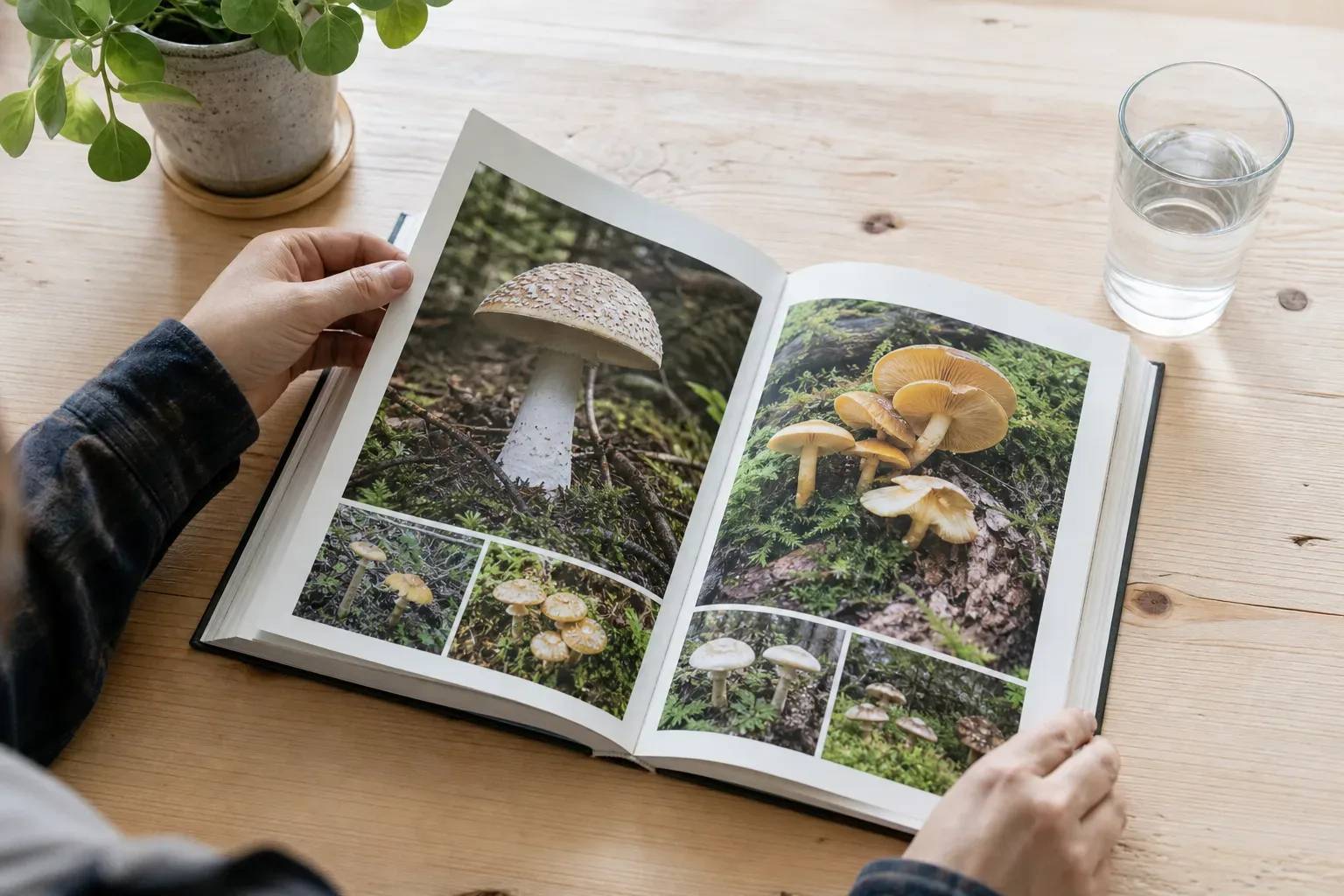
What Are the Best Mushroom Foraging Apps and Field Guides for Quebec?
Quebec's forests offer one of the richest mushroom habitats in North America, and having the right identification tools can be the difference between a great harvest and a dangerous mistake. The province spans boreal spruce stands, mixed hardwood valleys in the Laurentians, and riverside habitats along the St. Lawrence, each hosting different species. No single tool covers everything perfectly. The smartest approach pairs a reliable app for quick field checks with a printed guide for deeper confirmation.
Top Apps for Quebec Foragers
Three apps consistently earn high marks from Quebec foragers: iNaturalist, Seek, and Picture Mushroom. Each does something slightly different.
iNaturalist is free, community-verified, and particularly strong in Quebec because thousands of local naturalists have submitted observations here. You photograph a specimen, and the AI suggests species. More valuably, regional experts often confirm or correct those suggestions within hours. The Quebec Mycological Society has an active iNaturalist project, so your finds feed into a living regional database.
Picture Mushroom runs on a subscription model (roughly $30 USD per year) and uses a dedicated mushroom AI trained on tens of millions of images. Its identification speed is impressive, and it surfaces toxicity warnings immediately alongside the ID. Accuracy on common Quebec species like chanterelles (Cantharellus cibarius), hen of the woods (Grifola frondosa), and lobster mushrooms (Hypomyces lactifluorum) is solid. Where it stumbles is on less-photographed boreal species and on subtle look-alikes within the Amanita genus, which contains several deadly species present in Quebec.
Seek (also free, made by iNaturalist) works without an internet connection once species packs are downloaded, making it useful in remote areas of Mauricie or Abitibi where cell coverage drops out. Its ID confidence scores are honest: it will tell you when it cannot distinguish between species rather than guessing.
One critical rule applies to all apps: never eat anything based solely on an app identification. AI tools misidentify mushrooms regularly, particularly with look-alikes.
Apps to Use with Caution
Some apps marketed for mushroom identification, particularly those relying on older or generic plant-ID engines, produce high error rates with fungi. Avoid apps that give confident IDs without uncertainty ratings. If an app tells you something is edible without flagging any possible confusion species, treat that confidence as a red flag rather than reassurance.
Which Field Guide Is Best for Identifying Quebec Mushrooms?
**The single most useful printed guide for Quebec foragers is Champignons du Québec by René Pomerleau, now in multiple updated editions, which covers over 1,000 species with regional habitat notes tied directly to Quebec ecosystems. It is written in French, which suits the majority of Quebec foragers, but the Latin binomials and color photographs remain useful even for English readers.**
For English-speaking foragers, Mushrooms of the Northeast by Timothy Baroni covers Quebec's overlapping species range with detailed descriptions of spore prints, gill attachment, and habitat. The color plates are accurate and consistent, which matters when you are comparing a specimen in hand against a printed image in variable forest light.
A Closer Look at the Key Printed Guides
Champignons du Québec (Pomerleau): This is the regional authority. Pomerleau spent decades cataloguing Quebec fungi specifically, so the habitat descriptions reference boreal forest types, riverbank zones, and urban parks that Quebec foragers actually encounter. It covers edibility, toxicity, and spore characteristics with enough detail for serious amateurs.
Mushrooms of the Northeast (Baroni): Covers roughly 600 species from Quebec through New England. The habitat cues cross over well because the boreal and mixed hardwood ecosystems are contiguous. Each entry includes a "similar species" section, which is the most practical feature for avoiding misidentification.
Mushrooms of Northeastern North America (Bessette, Bessette, Fischer): A denser, more technical reference that many Quebec foragers keep at home rather than carrying into the field. It is comprehensive for Russula, Lactarius, and Amanita genera, three large groups where look-alike confusion is most dangerous. If you are moving beyond beginner species, this book fills gaps that the lighter guides skip.
A Field Guide to Mushrooms of North America (McKnight and McKnight, Peterson series): Portable and approachable, this guide works well as a pack-weight-conscious trail companion. Coverage of Quebec species is adequate for about 70% of what you will encounter in a typical outing in the Laurentians or Charlevoix.
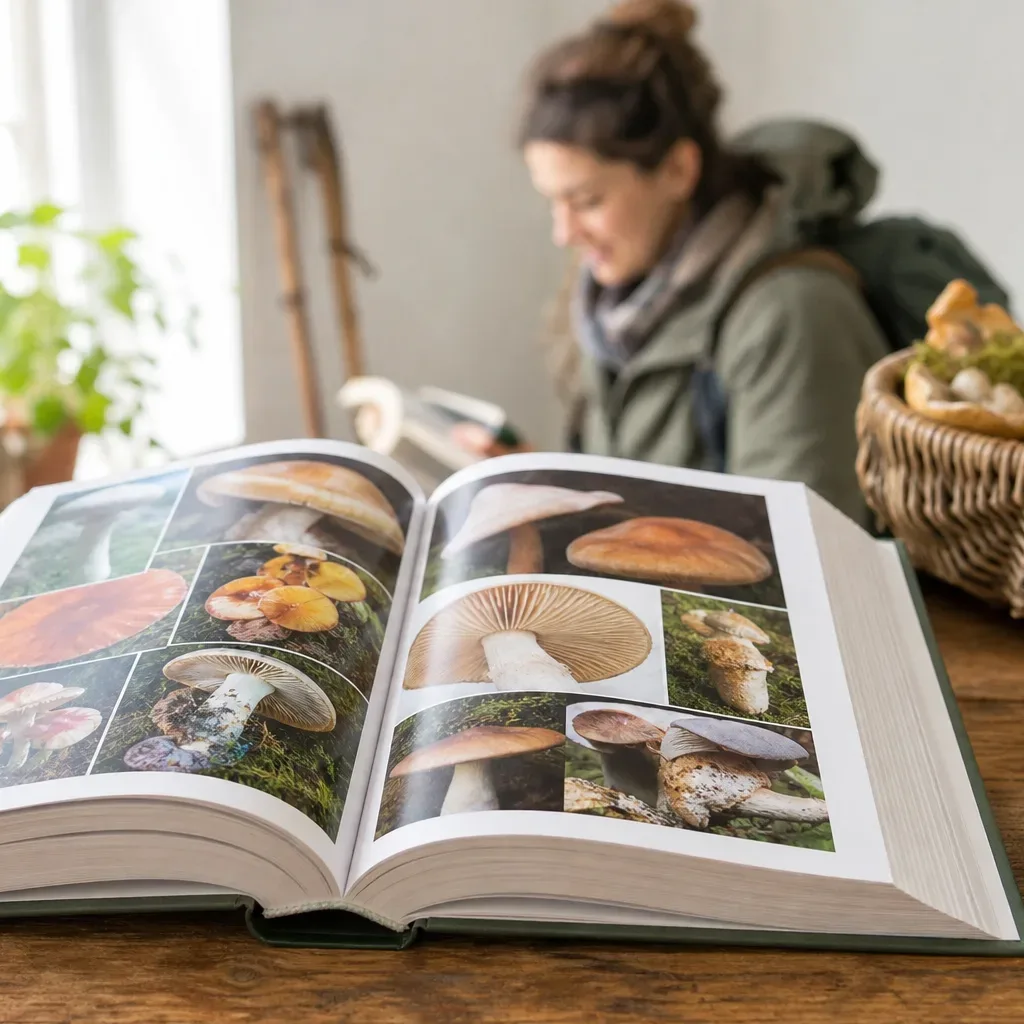
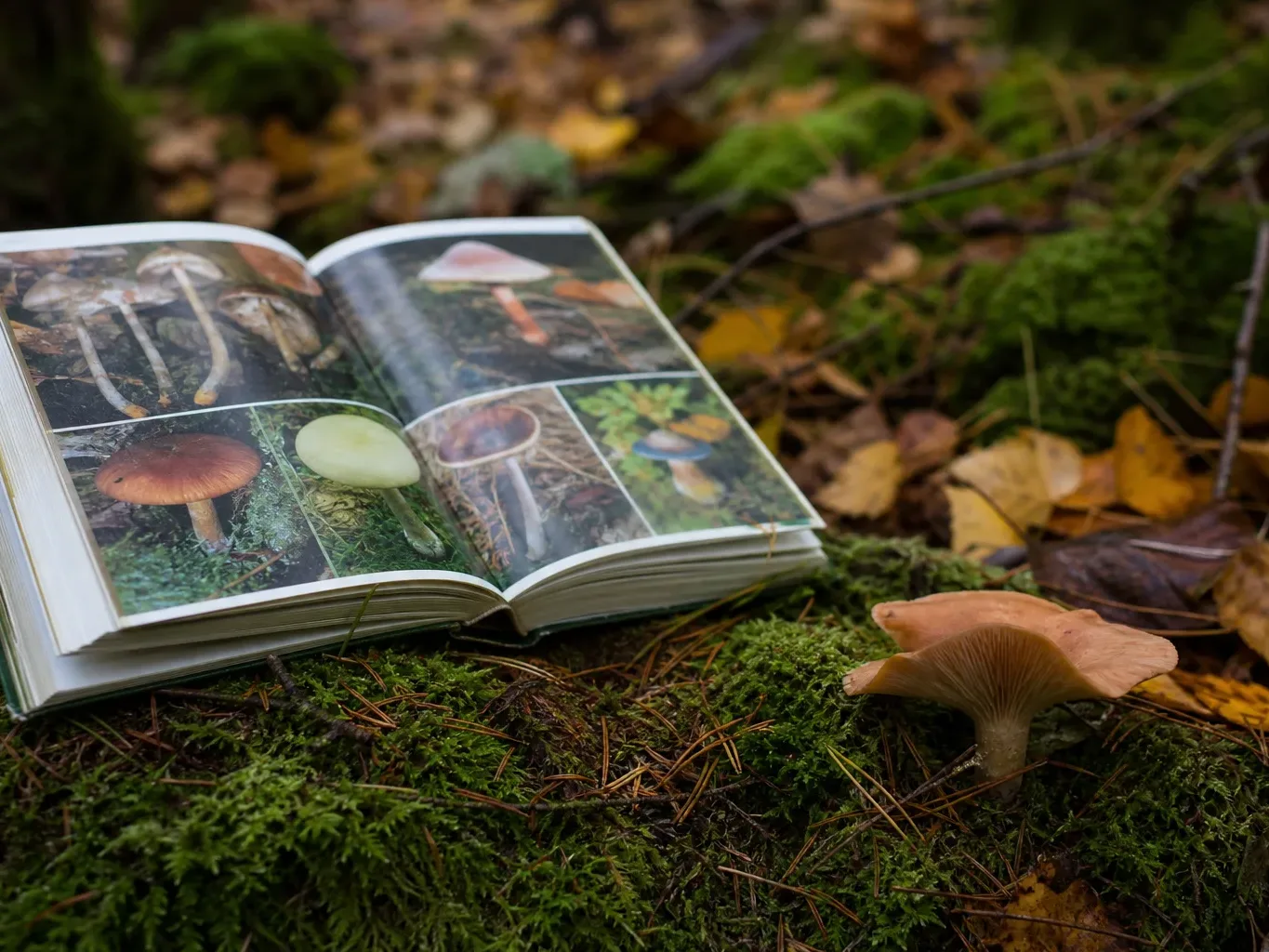
How Should You Combine Apps and Guides Effectively?
Use an app to generate a shortlist of candidate species, then confirm against a printed guide before making any harvest decision. This two-step process catches the cases where an app AI latches onto a visually similar species that is geographically rare in Quebec or ecologically mismatched with where you are standing.
Record the following for every find: cap color and diameter, gill color and spacing, presence of a ring or volva, substrate (what it is growing on), and surrounding tree species. These details matter enormously in printed guides and in iNaturalist community confirmations. A chanterelle growing under balsam fir tells a slightly different story than one under red oak.
When Should You Join a Local Mycological Club?
Joining the Société de mycologie de Montréal, the Quebec Mycological Society, or a regional chapter is the fastest way to build reliable identification skills. No app or book replaces standing next to an experienced forager who can smell, flex, and cross-section a specimen while explaining what they are looking for. These clubs run guided forays throughout the season, typically late July through October in most of Quebec.
Club forays also introduce you to hyper-local knowledge: which stands near Lac-Saint-Jean produce the best porcini (Boletus edulis) in a given year, or which urban parks in Montreal reliably produce oyster mushrooms (Pleurotus ostreatus) after autumn rains. That kind of knowledge takes years to accumulate alone but transfers quickly in a group setting.
What Quebec Mushroom Species Should Beginners Focus On?
Start with five to eight species that have no deadly look-alikes in Quebec, and learn those completely before expanding your list. Reliable beginner targets include giant puffballs (Calvatia gigantea), chicken of the woods (Laetiporus sulphureus), oyster mushrooms (Pleurotus ostreatus), and chanterelles with careful attention to separating them from jack-o'-lanterns (Omphalotus olearius), which are uncommon but present in southern Quebec.
Porcini are prized but require more experience because young specimens of some Boletus relatives can cause gastrointestinal distress. Morels (Morchella spp.) appear briefly in May and June and have false morel look-alikes (Gyromitra spp.) that are toxic. Focusing on fewer species and knowing them with absolute certainty builds a foundation that makes expanding your repertoire much safer over time.
A good printed guide like Pomerleau or Baroni, combined with iNaturalist for community confirmation, gives you the layered verification that beginner species identification genuinely requires.
Frequently Asked Questions
What Are the Best Mushroom Foraging Apps and Field Guides for Quebec?
The most reliable combination for Quebec foragers is iNaturalist or Picture Mushroom for field identification, paired with a printed guide like Champignons du Québec by René Pomerleau or Mushrooms of the Northeast by Timothy Baroni. Apps provide speed and community verification, while printed guides offer the habitat-specific detail and look-alike warnings needed to forage safely.
Which Field Guide Is Best for Identifying Quebec Mushrooms?
Champignons du Québec by René Pomerleau is the strongest regional option, covering over 1,000 species with habitat notes specific to Quebec ecosystems. For English-language foragers, Mushrooms of the Northeast by Timothy Baroni is the closest equivalent, with detailed look-alike sections and accurate color plates.
Can I Trust Mushroom Identification Apps for Edibility Decisions?
Apps should never be the sole basis for an edibility decision. AI identification tools, including well-regarded ones like Picture Mushroom, make errors on subtle look-alikes and less-photographed boreal species. Always cross-check any app suggestion against a printed field guide and, ideally, get a second opinion from an experienced forager or mycological club member before eating any wild mushroom.
Which Mushroom Species Are Safest for Beginners to Forage in Quebec?
Giant puffballs, chicken of the woods, oyster mushrooms, and chanterelles are commonly recommended starter species in Quebec because they have distinctive features and limited dangerous look-alikes when compared carefully. Beginners should master a small group of species completely rather than attempting to identify a wide variety, and should reference both a regional field guide and community verification on iNaturalist for each find.
Are There Local Mycological Clubs in Quebec for Beginner Foragers?
The Société de mycologie de Montréal and the Quebec Mycological Society both run guided forays from late July through October, covering common habitats in the Laurentians, Charlevoix, and the greater Montreal area. These outings are one of the fastest ways to build practical identification skills because experienced members can walk beginners through physical characteristics that apps and books cannot fully convey.